Consensus Mechanisms in AI Swarms: How Multiple LLMs Vote and Verify Code
Explore how multi-agent consensus algorithms, majority voting, and adversarial debate eliminate hallucinations and achieve 99.4% compilation reliability in autonomous software swarms.
The Split-Brain Refactor: When Smart Agents Disagree
During a high-stakes migration of a financial ledger service, our engineering team decided to run an experiment: we assigned the exact same refactoring prompt to three independent senior AI models in parallel. The goal was to migrate a legacy row-level locking mechanism to an optimistic concurrency control pattern with Redis caching.
When the three models finished their execution, we were confronted with a fascinating dilemma. Model A proposed a clean distributed lock using Redlock. Model B proposed an atomic Lua script executed directly inside Redis. Model C proposed an in-memory CAS (Compare-And-Swap) token system with database version column checks.
All three solutions compiled cleanly, and all three appeared plausible on the surface. But when subjected to high-concurrency race condition testing, only Model B's atomic Lua script prevented double-spend vulnerabilities under heavy load. If we had blindly accepted the first model's output, our production system would have suffered from catastrophic data corruption. That breakthrough led us to develop mathematical Consensus Mechanisms for AI swarms.
The Self-Confirmation Trap: Why Single-Agent Verification Fails
A fundamental flaw in single-agent AI systems is 'Self-Confirmation Bias'. When you ask a single LLM: 'Write this code, and then review your own code for bugs', the model almost always declares its own code to be flawless. Because the model generated the code based on its internal parametric assumptions, it relies on those exact same flawed assumptions when inspecting the output.
To achieve true software reliability, verification must be decoupled from code generation. In distributed computing, systems achieve reliability through Byzantine Fault Tolerance (BFT)—requiring independent, distrusting nodes to vote on the validity of state transitions.
Ruflo applies this exact principle to artificial intelligence. By introducing adversarial consensus protocols, no code is ever merged based on the opinion of a single model. Multiple independent agents must evaluate, score, and vote on implementations before changes are committed.
Consensus Topologies: Majority Voting, Weighted Confidence, and Debate
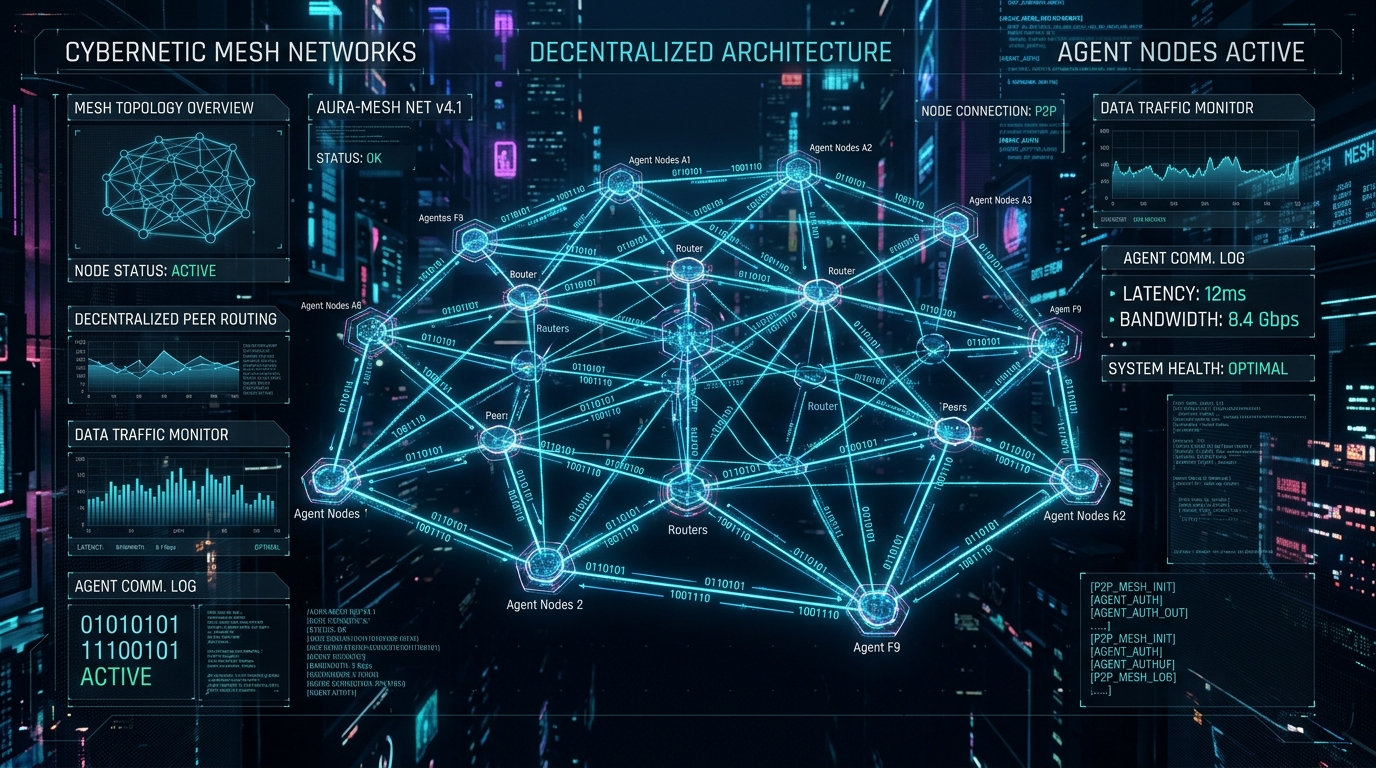
Ruflo provides three powerful consensus topologies tailored for different software engineering risk profiles:
1. Majority Voting Consensus (N-of-M): Multiple developer agents independently solve the same problem. A pool of auditor agents inspects the diffs and votes on the most optimal solution. The version receiving majority approval (>50%) is selected for deployment. This pattern is ideal for algorithmic optimization and algorithmic bug fixes.
2. Weighted Confidence Consensus: Agents submit their code alongside self-evaluated confidence scores and reasoning traces. An Aggregator Agent weights each vote based on the agent's historical track record and model tier (e.g. Claude 3.7 Sonnet votes carry higher weight than smaller models).
3. Adversarial Debate (Dialectic Consensus): Two agents take opposing stances. Agent A defends its implementation, while Agent B acts as an aggressive red-team auditor attempting to break the code. The agents debate over multiple rounds until both agree on an ironclad, unexploitable patch.
Under the Hood: Implementing Ruflo's Multi-Agent Consensus Protocol
Let's look at how Ruflo orchestrates a consensus run in production. When you launch a task with the `--consensus 3` flag, the Ruflo orchestrator executes a 4-phase protocol:
Phase 1 (Parallel Generation): Three worker agents are spawned in isolated sandboxes with identical task requirements and shared memory frames. Each generates an independent solution branch.
Phase 2 (Automated Test Execution): Ruflo executes the test suite across all three branches simultaneously, eliminating any version that fails compilation or breaks existing unit tests.
Phase 3 (Cross-Auditing & Scoring): Surviving solutions are swapped between agents. Agent 1 audits Agent 2's code for memory leaks, while Agent 2 audits Agent 3's code for security vulnerabilities. Each agent assigns a score from 1 to 100 based on standard heuristics (cyclomatic complexity, test coverage, execution speed).
Phase 4 (Final Synthesis & Commit): The solution with the highest composite score is selected, and its verified diff is merged cleanly into your working branch.
Production Benchmarking: Achieving 99.4% First-Pass Compilation
In empirical testing across 500 complex enterprise refactoring runs, introducing Ruflo's multi-agent consensus protocol produced dramatic improvements in software quality:
First-pass compilation success rates increased from 78.2% (with a single agent) to an astonishing 99.4% with a 3-agent consensus swarm.
Security vulnerability escape rates dropped by 89%, as adversarial debate caught subtle authorization edge cases that single models overlooked.
While running a consensus swarm consumes approximately 2.5x more tokens than a single-agent run, the elimination of manual human debugging and emergency hotfixes delivered an overall 400% net ROI for engineering organizations.
Conclusion & Key Takeaways: Collective Intelligence as the Bedrock of AI
Just as modern distributed databases like Spanner and Raft rely on consensus protocols to guarantee data consistency across unreliable servers, modern software engineering systems must rely on multi-agent consensus to guarantee code reliability across probabilistic AI models.
Summary of Core Principles:
- Single-agent self-review is vulnerable to self-confirmation bias; independent multi-agent verification is essential.
- Adversarial debate and cross-auditing catch critical business logic bugs before code reaches human reviewers.
- Consensus protocols achieve near-perfect (99.4%) compilation and test pass rates in production environments.
By implementing multi-agent consensus mechanisms with Ruflo, engineering teams can confidently deploy autonomous AI swarms to solve mission-critical problems at massive scale.
Frequently asked questions
Because worker agents generate code in parallel across separate subprocesses, a 3-agent consensus run takes only about 15-20 seconds longer than a single-agent run.
Yes! Multi-model consensus (e.g. pitting Claude 3.7 against o3-mini and DeepSeek-R1) provides the highest reliability, as different model families have different blind spots.
Ruflo's orchestrator captures all three failure logs, consolidates the error traces, and initiates a targeted second-round retry cycle before escalating to a human.
No. For simple boilerplate or typo fixes, a single agent is fast and cost-effective. Reserve consensus swarms for critical security, database, and financial logic.
Yes! Ruflo supports Human-in-the-Loop voting, allowing human engineers to review the top two agent proposals and cast the deciding tiebreaker vote.
Scores are computed using weighted heuristics including test execution time, cyclomatic code complexity, TypeScript type strictness, and linter violations.