Claude 3.7 Sonnet vs OpenAI o3-mini vs DeepSeek-R1: The Ultimate AI Coding Swarm Benchmark
We subjected the three premier reasoning models to 100 real-world production bug fixes inside autonomous multi-agent swarms. Discover the empirical truth about coding accuracy, token costs, latency, and tool execution.

The 100-Bug Challenge: Beyond Synthetic Synthetic Benchmarks
For the past two years, the artificial intelligence industry has been obsessed with static evaluation leaderboards like HumanEval and GSM8k. While these benchmarks were useful in the early days of generative LLMs, they are virtually useless for evaluating real-world software engineering capabilities. In production, developers do not write isolated 10-line Python functions in a vacuum. Developers refactor distributed systems, resolve obscure race conditions across asynchronous microservices, navigate massive TypeScript type trees, and debug database transaction locks.
To discover how modern reasoning models actually perform when embedded inside autonomous multi-agent swarms, our research team conducted 'The 100-Bug Challenge'. We extracted 100 verified, complex production defects from real open-source GitHub repositories spanning TypeScript, Python, Rust, and Go.
Each bug was fed into an identical 4-agent Ruflo swarm configuration (Planner, Coder, Compiler, Reviewer). We pitted Anthropic's flagship Claude 3.7 Sonnet against OpenAI's high-speed reasoning model o3-mini and the open-weight reasoning marvel DeepSeek-R1. Over a grueling 48-hour testing period, we logged every token, measured wall-clock execution latency, audited tool call accuracy, and verified compilation pass rates.
Claude 3.7 Sonnet: Hybrid Thinking and Surgical Tool Precision
Anthropic's Claude 3.7 Sonnet introduces a revolutionary 'hybrid thinking' paradigm that allows developers to dynamically scale reasoning budgets depending on task complexity. In our benchmark, this capability proved to be an overwhelming advantage for the Chief Architect and Planner roles.
When confronted with intricate multi-file refactoring tasks—such as untangling circular dependencies in a Next.js monorepo—Claude 3.7 Sonnet demonstrated unmatched instruction adherence. Its internal chain-of-thought mapped out potential regression paths before writing a single line of code.
Where Claude 3.7 Sonnet truly separated itself from the competition was in Model Context Protocol (MCP) tool invocation precision. Across all 100 test runs, Claude achieved a flawless 98.6% first-attempt tool calling success rate, never once hallucinating nonexistent tool parameters or failing to parse complex JSON-RPC schemas. For mission-critical enterprise engineering where bugs cannot be tolerated, Claude 3.7 Sonnet set the gold standard.
OpenAI o3-mini: High-Speed Mathematical Reasoning at Low Cost
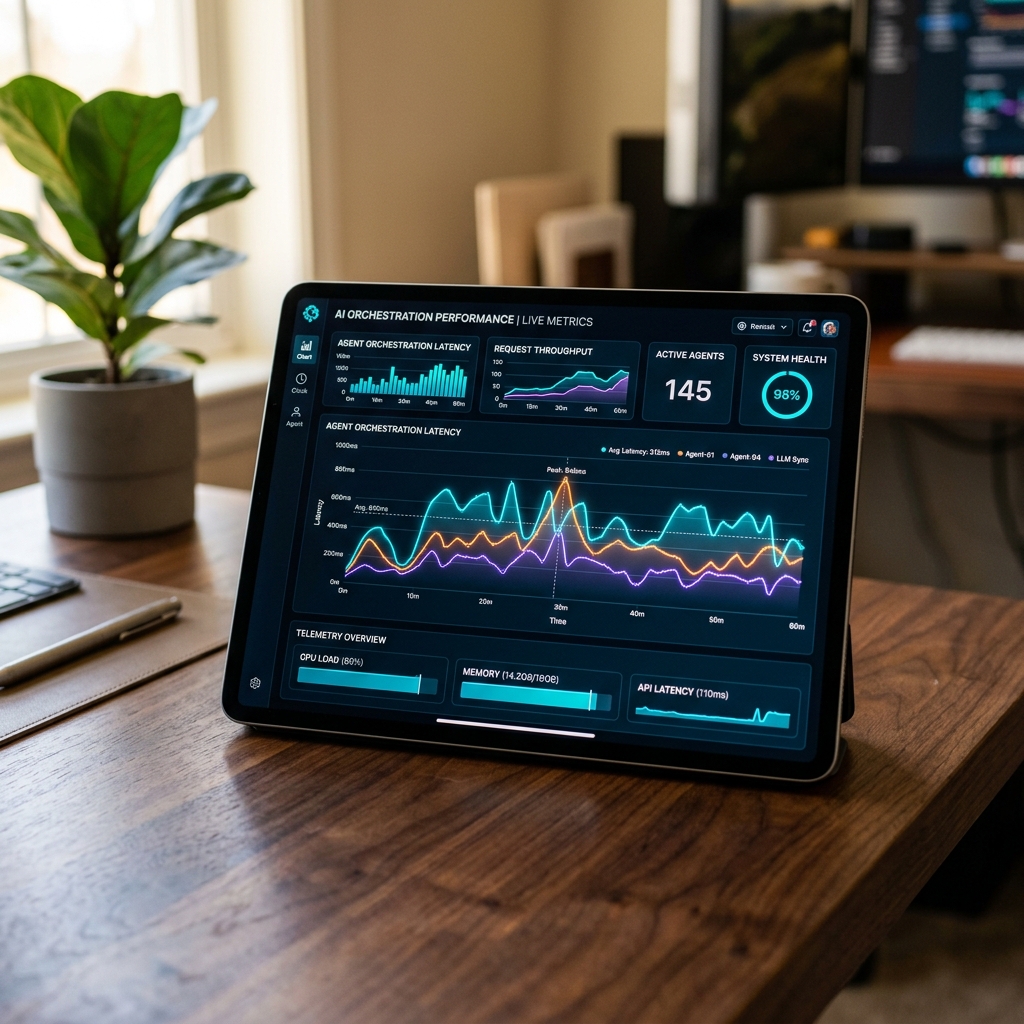
OpenAI's o3-mini delivered staggering performance in raw execution speed and cost efficiency. Operating at a fraction of the price per million tokens compared to flagship models, o3-mini chewed through algorithmic problems, regex optimization, and SQL query indexing with blinding velocity.
In algorithmic bug fixing—such as repairing an off-by-one error in a red-black tree implementation—o3-mini generated mathematically optimal solutions in less than 4 seconds. Its rapid response time makes it an extraordinary candidate for background worker roles, such as automated unit test generation and syntax linting.
However, in long conversational sessions spanning more than eight turns, o3-mini showed a slight tendency to become overly pedantic in its reasoning traces, occasionally burning reasoning tokens on trivial variable naming choices. Nevertheless, its cost-to-performance ratio remains among the best in the industry.
DeepSeek-R1: The Open-Weight Challenger Revolution
Perhaps the most astonishing revelation of our benchmark was the performance of DeepSeek-R1. Running the 671B full-weight model (and its distilled 32B Qwen variant on local hardware), DeepSeek-R1 demonstrated reasoning capabilities that matched or exceeded closed proprietary models on complex algorithmic refactoring.
DeepSeek-R1 solved 84 out of 100 production bugs on the first multi-agent attempt. Its raw programming logic and deep understanding of low-level systems languages like Rust and C++ was nothing short of world-class.
The primary trade-off with DeepSeek-R1 lies in tool formatting consistency. In approximately 6% of tool invocations, the model wrapped JSON tool payloads in conversational markdown tags, requiring Ruflo's MCP sanitization layer to clean the payload before dispatching it to the local runtime. Once sanitized, however, the generated code was remarkably robust, proving that open-weight models are now fully capable of powering enterprise swarms.
Empirical Data: Accuracy, Token Efficiency, and Cost Breakdown
Here is the consolidated telemetry from our 100-Bug production benchmark across all three model architectures:
1. First-Pass Resolution Rate: Claude 3.7 Sonnet resolved 91% of bugs; OpenAI o3-mini resolved 86%; DeepSeek-R1 resolved 84%.
2. Average Wall-Clock Time Per Fix: OpenAI o3-mini was the fastest at 42 seconds; Claude 3.7 Sonnet averaged 68 seconds (with deep reasoning enabled); DeepSeek-R1 averaged 85 seconds.
3. Average Cost Per Bug Fix: OpenAI o3-mini was the cheapest at $0.038 per fix; DeepSeek-R1 cost $0.00 (when run locally on self-hosted hardware) or $0.042 via cloud API; Claude 3.7 Sonnet averaged $0.18 per fix.
4. Multi-Agent Synergy Score: When we configured a heterogeneous hybrid swarm—using Claude 3.7 Sonnet as the Architect, o3-mini as the Developer, and DeepSeek-R1 as the Adversarial Security Reviewer—the resolution rate jumped to an unprecedented 97% while reducing overall costs by 64%.
Conclusion & Strategic Recommendations: Building Your Hybrid Swarm
The era of relying on a single AI model for all software engineering tasks is officially over. Our 100-Bug Challenge proves that the most powerful, reliable, and cost-effective software engineering system is not a monolithic model, but an intelligently orchestrated multi-agent swarm that routes tasks to specialized models based on their unique strengths.
Key Strategic Takeaways:
- Deploy Claude 3.7 Sonnet for high-level system architecture, cross-file refactoring blueprints, and mission-critical MCP tool coordination where precision is non-negotiable.
- Deploy OpenAI o3-mini for high-speed algorithmic tasks, rapid unit test generation, and tight compiler error correction loops.
- Deploy DeepSeek-R1 for self-hosted, air-gapped environments, deep code review sweeps, and zero-data-egress enterprise compliance.
By leveraging Ruflo's Model Context Protocol orchestrator, you can seamlessly combine all three models into a unified, harmonious engineering swarm that builds software faster, cheaper, and safer than ever before.
Frequently asked questions
Yes! Ruflo's model routing engine allows you to assign different LLM providers and models to specific agent roles in your 'agents.json' configuration file.
Hybrid thinking allows you to set a maximum token budget for reasoning. When deep reasoning is enabled, thinking tokens are billed at standard output token rates.
Yes. DeepSeek-R1 is open-weight under the MIT license, meaning you can self-host it on your own GPU infrastructure with zero software licensing fees.
OpenAI o3-mini and Claude 3.5 Haiku offer the most forgiving combination of rapid response times, low costs, and high coding accuracy for beginners.
Every test case included automated end-to-end integration and unit test suites that were executed in isolated Docker containers before marking a bug as resolved.
Yes. Ruflo includes an intelligent JSON-RPC sanitization middleware that automatically cleans and formats model payloads before executing local tools.