Ruflo vs Single AI Agents: Why Coordination Wins
Single-agent AI hits context, cost and reliability ceilings. Ruflo's multi-agent orchestration unlocks scale, lower token cost and better autonomous outcomes.
The Ceilings of Single-Agent AI Assistants
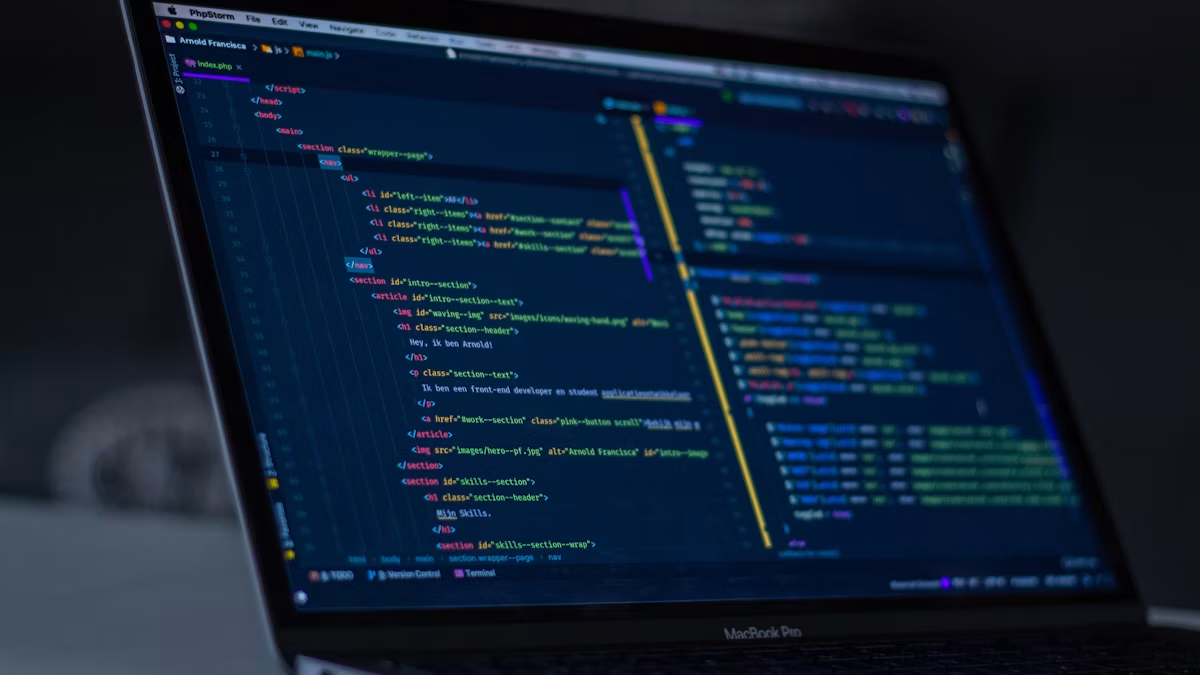
In the current software development landscape, millions of engineers use single-agent AI assistants like ChatGPT, Claude, or standard autocomplete plugins. While these tools are fantastic for short tasks—such as explaining a regex pattern, generating a boiler-plate function, or refactoring a single file—they quickly hit a hard ceiling when applied to complex, multi-file software engineering projects.
The first ceiling is the Context Window limit. Even though models now support context windows up to 200k tokens or more, loading an entire workspace into a single prompt is highly inefficient. As the prompt grows larger, the model's focus degrades, leading to the well-documented 'lost in the middle' phenomenon where it ignores mid-prompt instructions. Additionally, large prompt loads incur astronomical token costs and slow down response latency.
The second ceiling is the Cognitive Persona bottleneck. An AI model can represent a software engineer, a security auditor, or a product manager—but it cannot effectively represent all three simultaneously in a single turn. When asked to code a feature and check it for security exploits in the same prompt, the model tends to make compromises, overlooking critical security concerns to focus on feature completion. This structural compromise leads to brittle and insecure code.
How Ruflo Orchestrator Unlocks Exponential Scale
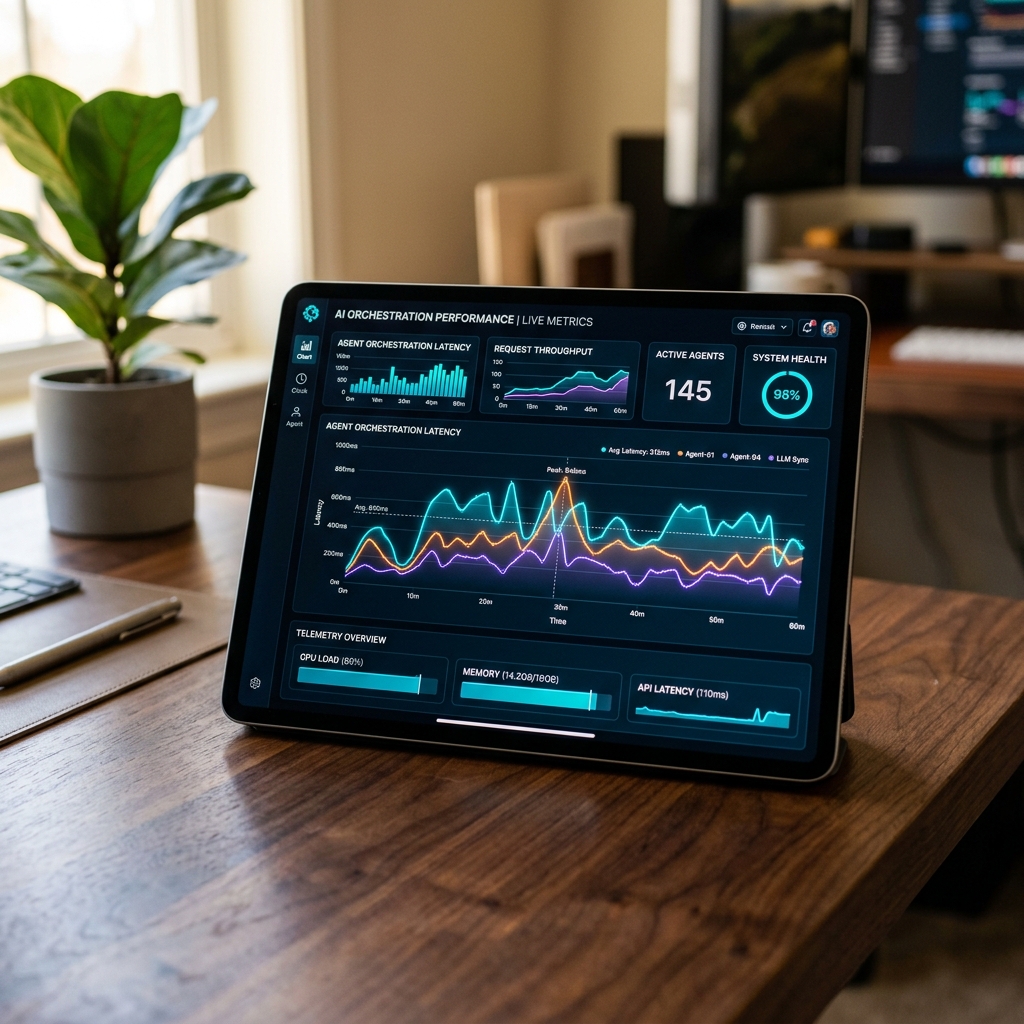
Ruflo bypasses these structural limitations through its multi-agent orchestration engine. Instead of forcing one model to do everything, it delegates work to a team of specialized agents, coordinating their focus and maximizing their utility. This architectural approach delivers several key advantages:
1. Focused, Lean Contexts: Because each agent has a narrow task, it only receives the specific code blocks and shared memory frame required for its job. The Planner Agent outlines the architecture; the Coder Agent only reads the specific file and its direct imports; the Reviewer Agent only inspects the diff. This keeps prompts incredibly small, resulting in ultra-fast model responses, high instruction adherence, and low token overhead.
2. True Cognitive Specialization: In Ruflo, the Security Auditor Agent is configured to be highly critical and adversarial, while the Coder Agent is focused on feature delivery. When the Coder Agent presents a solution, the Security Agent actively tries to break it. This constructive conflict results in extremely robust, secure, and production-grade software that no single assistant could write.
3. Autonomy and Self-Correction: A single assistant stops the moment an error occurs, requiring the human user to copy-paste the error and prompt it again. Ruflo swarms are self-correcting. If a unit test fails, the Tester Agent passes the error logs back to the Developer Agent, which refactors the code automatically. The swarm continues to iterate and solve issues autonomously, only escalating to the human when it runs into an unsolvable roadblock.
Detailed Cost and Performance Analysis
Let's look at a concrete comparison of a typical feature implementation task using a single AI assistant versus a Ruflo multi-agent swarm. Suppose we want to add a complex payment gateway integration with webhooks and database persistence to an existing workspace containing 15 files.
With a single-agent assistant, you have to upload all 15 files (approx. 50k tokens) into the chat. As you iterate on the payment logic over 10 turns, you upload 50k tokens on every single turn. By the end of the session, you have consumed 500,000 tokens, costing around $1.50 to $3.00, and the assistant has likely forgotten the initial webhook structure, forcing you to manually fix broken imports.
With Ruflo, the Planner Agent first reads the 15 file structures (consuming 8k tokens of metadata) and creates a step-by-step blueprint. The Coder Agent is then spawned, receiving only the payment controller file (2k tokens) and the blueprint. As it writes the code, it interacts over 5 turns, consuming only 15k tokens in total. The Tester Agent then runs Jest locally, finds an import bug, and gives the Coder 1 turn to fix it (3k tokens). The final code is verified and written. Total token consumption is less than 40k tokens, costing a fraction of a single-agent run while requiring zero manual human debugging.
When to Use Single vs. Multi-Agent AI
While multi-agent systems are incredibly powerful, they are not a silver bullet for every single computing task. It is important to know when to leverage a light, single-agent assistant and when to spin up a fully coordinated Ruflo swarm to save time and energy.
For simple, single-turn tasks like generating a CSS media query, explaining a specific terminal command, translating a text file, or formatting some raw data, a single-agent assistant is fast, efficient, and cost-effective. There is no need to spin up a coordinated swarm with short-term memory to solve a one-shot programming question.
However, for multi-step engineering projects—such as building new routing paths, refactoring legacy code modules, writing comprehensive test suites, creating static site export structures, or conducting automated security sweeps—Ruflo is the clear winner. Ruflo excels at handling state persistence, tool execution, and collaborative cross-checking, making it the perfect choice for complex, production-grade applications.
Frequently asked questions
Not at all. The Ruflo CLI automates the initialization and configuration process, providing an out-of-the-box swarm setup in under five minutes with standard default agents.
Yes, Ruflo provides a beautiful CLI dashboard and telemetry tracking, allowing you to see exactly which agent is active, what tools they are running, and what they are writing.
While multi-agent calls involve more individual requests, because each prompt is stripped of irrelevant context, the total token load is often lower than single massive prompts.
Models with high reasoning capabilities and strong code-generation metrics like Claude 3.5 Sonnet and GPT-4o are ideal for Coder roles in Ruflo swarms.
Yes, you can configure the orchestrator to route specific tasks to local models running on Ollama or vLLM to ensure zero data egress.
The compiler agent captures errors and feeds them back to the Coder Agent. The system attempts up to 3 automated correction iterations before requesting human assistance.