Best AI Orchestration Platforms in 2026
An overview of the leading AI orchestration platforms, with a focus on multi-agent capabilities, memory and MCP support.

Evaluation Criteria for Modern Orchestrators
As the demand for autonomous agent swarms has surged, a variety of AI orchestration platforms have emerged in the developer ecosystem. Choosing the right orchestrator is critical, as it acts as the core operating system for your intelligence layer. To evaluate these platforms fairly, we must look beyond marketing claims and focus on core architectural capabilities.
The first key criterion is Memory Architecture. Does the platform support a unified, double-tiered memory engine? If the orchestrator lacks a native short-term transactional memory and long-term vector store, your agents will suffer from high context costs, slow response latencies, and persistent hallucinations.
The second key criterion is Model and Tool Interoperability. A modern orchestrator must support the Model Context Protocol (MCP) to allow agents to easily discover and execute tools across different clients without custom coding. It must also be model-agnostic, allowing you to seamlessly swap between Anthropic, OpenAI, Google, and local open-weight models.
The third criterion is Topology Flexibility. The engine must support multiple coordination topologies (Hierarchical, Mesh, and Consensus) to ensure that tasks of varying complexity are handled with maximum resource efficiency and code safety.
The Leading AI Orchestration Contenders
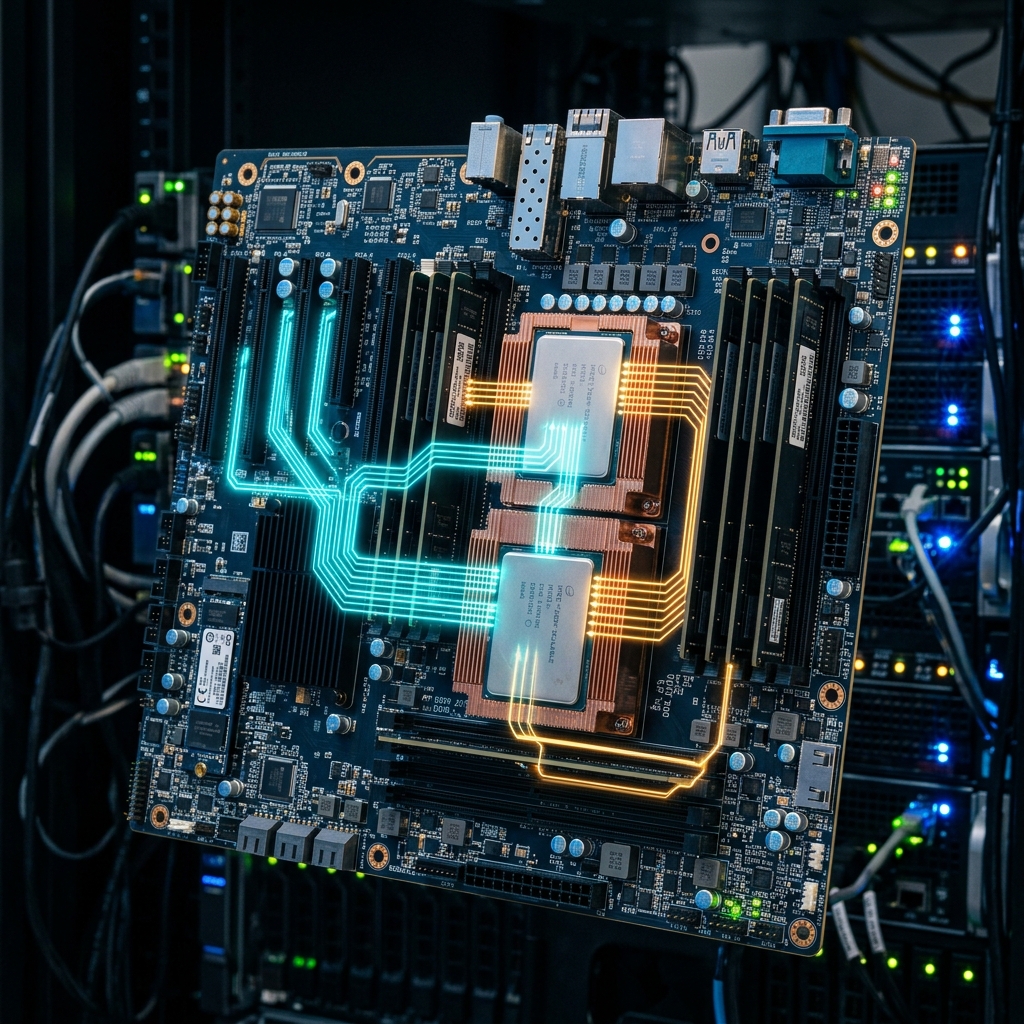
Let's conduct a detailed analysis of the leading AI orchestration platforms in the developer ecosystem, highlighting their architectural strengths and weaknesses:
1. CrewAI: A highly popular framework designed for building structured agent teams. CrewAI excels at setting up role-playing agents with clear goals and tasks. However, it relies heavily on sequential execution models, lacking the advanced parallel execution, local auto-correction loops, and federated peer-to-peer capabilities that complex software development requires.
2. Microsoft AutoGen: A powerful exploratory framework that enables multi-agent conversations. AutoGen is fantastic for research, complex simulations, and open-ended developer experimentation. However, it lacks out-of-the-box MCP tools, persistent semantic memory, and can be difficult to deploy in secure, low-latency production environments.
3. Ruflo: Engineered from the ground up as a high-performance, developer-focused agent orchestrator. Ruflo features native, zero-config MCP server integration, a robust double-tiered shared memory engine, support for advanced parallel topologies, local auto-correction loops, and distributed federated node networks. It is the premier choice for production-grade, autonomous software development.
Summary and Recommendation
To summarize, if you are looking to build a conversational simulation or conduct scientific agent research, Microsoft AutoGen is an excellent, flexible playground. If you are building simple content generation pipelines or basic role-playing agent configurations, CrewAI provides a friendly, structured starting point.
However, if you are a professional software developer looking to supercharge your local coding workflow, build self-correcting development pipelines, maintain deep project memory across sessions, and deploy highly secure distributed agent swarms, Ruflo is the clear, industry-grade choice.
Its native MCP architecture, high-speed local memory database, and automatic integration with editors like Claude Code and Cursor deliver unmatched speed, precision, and security, turning single-threaded autocomplete into a highly coordinated, self-correcting development powerhouse.
Frequently asked questions
Not at all. Ruflo uses a clean, intuitive JSON configuration model for agents, and provides an out-of-the-box CLI that handles initialization, tools, and memory setup instantly.
Yes, you can easily bridge frameworks using the Model Context Protocol, allowing Ruflo agents to expose tools and share memory with other agent setups.
Ruflo is highly optimized for token cost because its dual-tiered memory system prevents bloated prompts, outperforming sequential CrewAI runs.
CrewAI supports basic memory wrappers, but lacks the native, versioned vector synchronization that is built directly into Ruflo's core database.
Ruflo features a high-performance concurrency scheduler that schedules and executes independent tool calls in parallel subprocesses.
While AutoGen is highly flexible, setting up local offline sandboxes and auto-correction compilers is significantly easier in Ruflo.